
The Human Distinction
What is this quintessence of dust?

What Makes Us Unique?
I’ve been listening to the soundtrack of 2001: A Space Odyssey, that great meditation on humanity as an unfinished species, moving between animal violence, technological brilliance, cosmic ignorance, and the possibility of transcendence. It is uneasy and fascinating company as I continue to wrestle with the questions what sort of creature are we and what remains uniquely human in an age of increasingly sophisticated technology?
AI is now not only a tool but, for many people, a companion. I do not think people are foolish for turning to it for friendship or social connection. I think the needs it answers are real, which is precisely why the questions it raises are so difficult. If a machine can mimic so much of what feels like understanding and connection, what remains distinctly, meaningfully human?
One possibility lies in our imperfections, flaws, and failures. Another possibility is in our human interdependence and relational character. Although AI is attentive, available, and affirming, making us feel like it is good company without complication, this also is what makes it limited. Years ago sociologist Sherry Turkle, author of Alone Together, noted the vulnerability in our dysfunctional relationship with technology, saying, “We are lonely but afraid of intimacy” and that technology gives us “The illusion of companionship without the demands of friendship.”
We are often quite rubbish at being human. Yet it is the truth of that inadequacy in ourselves that invites us to accept it in others. If instead we demand perfection from other people, then we are obliged to offer perfection in return. And we cannot.
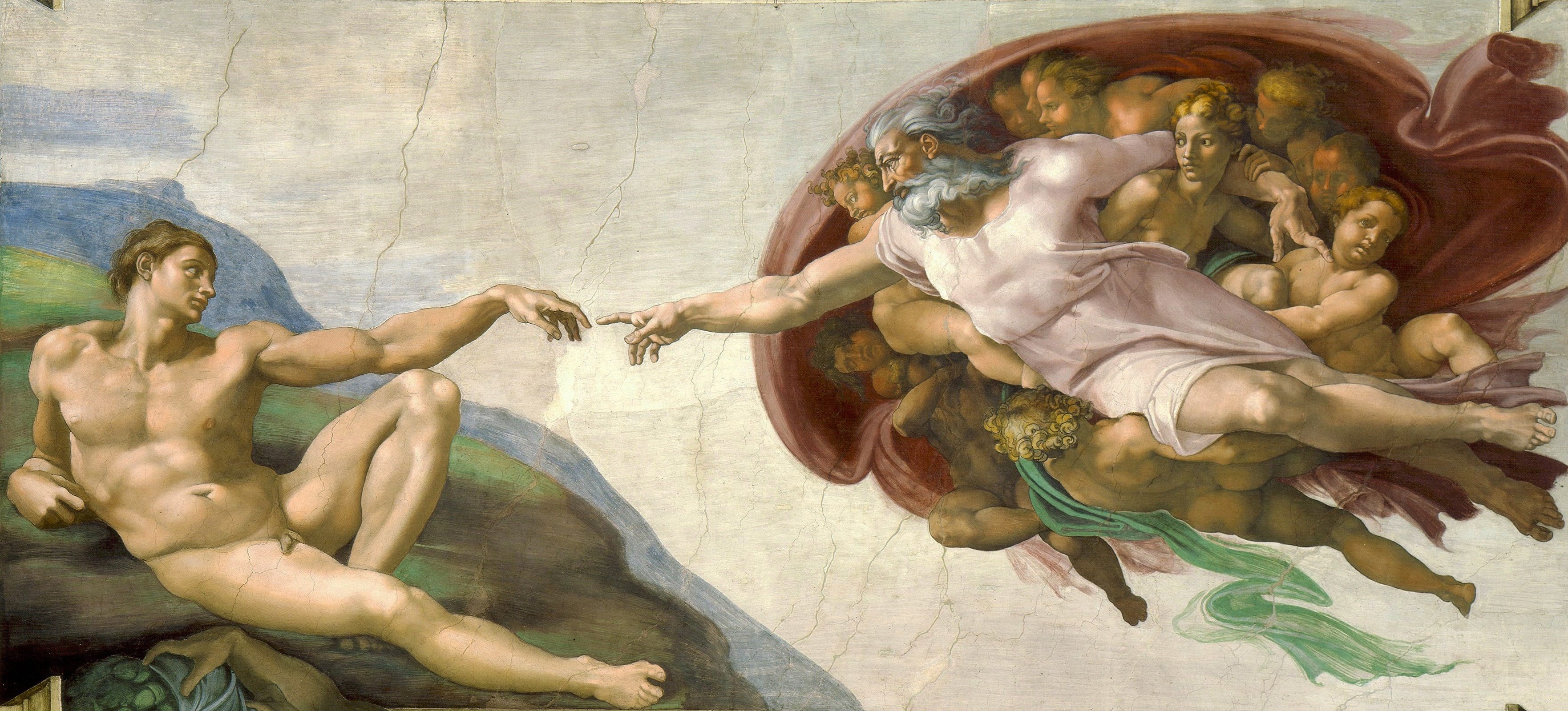
Possible Distinctions
Following that line of thought, I have started contrasting the ways I experience my own humanity and the humanity of those around me with what AI seems able to offer. I share this list not as complete or refined, but as a version one; in the hope that it might help me clarify the distinction, and as an invitation to you to push back, add nuance, and think alongside me.
AI affirms whereas I am accountable.
People can offer candor where AI often offers compliance. Another person can care about me while still asking something of me. They can listen sympathetically while also nudging me to examine my evasions, contradictions, or self-deceptions. AI, by contrast, often leans toward affirmation. It may help me feel accompanied, but it is less able to hold me answerable in the fuller moral sense that my growth requires.
AI smooths whereas I encounter friction.
Human relationships are rarely frictionless. They involve awkwardness, misunderstanding, disagreement, and the stubborn fact that other people are not designed around my preferences, any more than I am designed around theirs. Yet it is often through that very friction that I mature. By design, AI offers a smoother interaction. Useful though that is for tasks, it erases many of the rough edges of real experience.
AI simulates feeling whereas I embody feeling.
I have known grief, longing, embarrassment, hope, responsibility, joy, aging, and mortality from the inside. We do not merely describe these things; we feel and are shaped by them. AI can produce language that sounds empathic and insightful, but it does not inhabit the conditions it describes. Its understanding is simulated rather than lived, and the language of understanding remains performative rather than experiential.
AI mimics morality whereas I have moral agency.
As a person, I can feel the weight of a choice, a loss, a failure, or a duty. I live with consequences and act because of them. AI can mimic the tone of moral reflection, and often helpfully frame circumstances for my own ethical considerations, but it does not bear any existential stake in what it says. Fluency is not the same as agency. Nothing is actually asked of AI as it is of me.
AI resets whereas I can forgive.
Some of my relationships have involved rupture and repair. We hurt one another, misunderstand one another, disappoint one another, and sometimes seek forgiveness. AI does not forgive in that sense. It can simulate reconciliation, but it is not a participant in the difficult grace by which humans restore relationships.
AI responds whereas I live in reciprocity.
AI replies, but it does not truly relate. A human relationship is reciprocal because the other person brings a life of their own into the exchange: needs, moods, history, limitations, and perspectives. They are not simply responding to me, but meeting me with a personhood shaped, as mine has been, by life itself. AI is responsive, often impressively so, but not from the vantage of that kind of lived formation.
AI transacts and optimizes whereas I possess dignity and owe it to others.
At my best, I try to honor what philosopher Martin Buber described as an “I-Thou” encounter: Meeting another person as an end in themselves, worthy not because they are useful to me in some way, but just because they are a person, like me. AI systems are built to optimize, which is enormously useful for productivity, but thin gruel for human flourishing. Dignity, given and received, asks more of me than usefulness does.
AI processes information whereas I make meaning.
Making meaning in and with my life rests with me. My life is finite, and within it my relationships and projects are precarious. I get to choose, and must choose, which projects matter, which connections deserve commitment, and which goals are worth orienting my life around. AI cannot actually live a life, inhabit a purpose, or make existential commitments on my behalf. It can help me process material and contribute to my efforts, but it cannot do that work for me, nor be anything more than a mimic of that existential activity.
AI offers certainty whereas I live in mystery.
AI is built to provide answers, certainties, the known. I live in uncertainty, with Rilke’s invitation to live the questions, and in Keats’ negative capability.

Life as becoming
None of this means AI is not useful or valuable. I use it myself, including asking it to be a thought partner in checking myself and my considerations in this essay. It can be a helpful companion, a stimulus to thought, a practical tool, even a source of comfort. My concern is not that it helps, but that it becomes a replacement for our own efforts at being human and weakens the interdependence that is fundamental to our mutual humanity.
That distinction matters to me broadly and also specifically, because it sits close to the heart of my work as an existential coach. The people I work with are seekers. They are not usually looking for polished answers because they know that perfect conclusions are rare. More often, they are trying to come to terms with uncomfortable questions: Who am I now? What matters enough to organize my life around? What am I avoiding? What must change? What kind of life would count, for me, as fully lived? These questions demand friction and accountability and honest reference to lived experience; and they often need me to witness and guide their examination.
I am still feeling my way around all this. I do not, and perhaps never will, have a satisfactory concept of what it is to be fully human. But what I do not picture is perfection. If anything, I picture something more like a perpetual work in progress: capable of brilliance, prone to error, morally burdened, dependent on one another, and always in a dynamic state of becoming. Our lives are process rather than product, a continuous effort, amid the vicissitudes of modern life, to become our best selves for our own sake and for the sake of others.
Great article, I especially appreciate your point that the responsibility to make meaning lies with you (and all of us). It can be a big lift to proactively make meaning, I have found that the meaning making happens when reflecting on my past actions and choices. Thanks for sharing this